



Tenure-track Faculty

BACK TO LIST
Professor, KDI School of Public Policy and Management
Founder and Director, Open Government & Innovation Lab (OGI Lab)
Research Interests: Artificial Intelligence and Public Governance; Innovation Ecosystems and Institutional Evolution; Cultural and Creative Economies; Policy Knowledge and International Cooperation; Anticipatory Governance and Societal Futures
1. Academic Profile
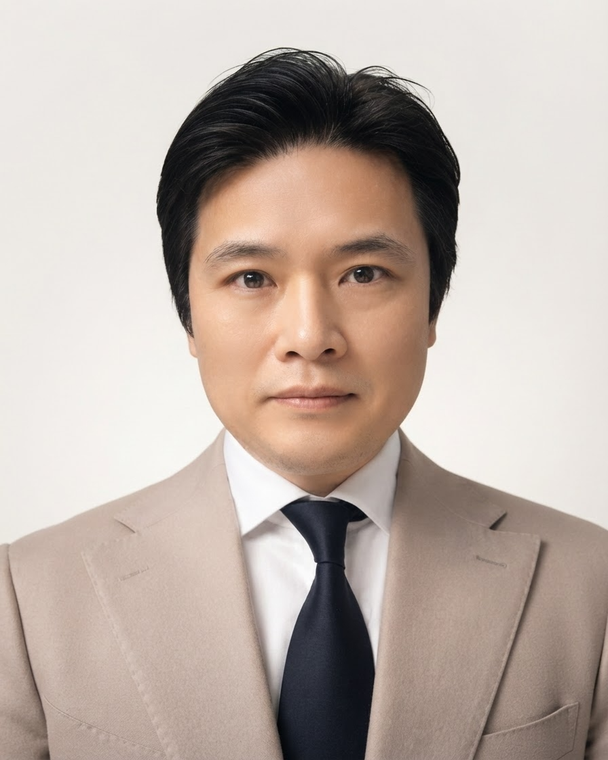
Taejun (David) Lee is a Professor at the KDI School of Public Policy and Management. His research explores how artificial intelligence, technological innovation, knowledge, culture, creativity, and institutional arrangements interact to reshape human agency, organizational capabilities, public governance, and societal transformation.
His scholarship is guided by a fundamental question: How can fragmented knowledge, resources, technologies, and creative capacities be transformed into collective intelligence, institutional capabilities, and sustainable public value?
Drawing on public administration, innovation studies, organizational and institutional theory, communication, cultural and creative economy research, and futures studies, Professor Lee investigates the mechanisms through which distributed actors and resources become coordinated and mobilized for collective action. His work bridges disciplinary boundaries to explain the evolving relationships among technology, institutions, and society.
He describes his scholarly and professional identity as a “Public Governance Designer and Engineer,” reflecting his commitment to integrating theoretical inquiry, empirical research, policy design, and institutional innovation.
Professor Lee joined KDI School in 2015 and has served as a full professor since 2020. Previously, he held faculty positions as an Assistant Professor at Bradley University in the United States (2010–2012) and Kookmin University in South Korea (2012–2015).
He is a two-time recipient of the KDI School Best Research Award (2017 and 2020).
2. Research Philosophy and Intellectual Agenda
Professor Lee's research begins with the recognition that technological advancement, knowledge accumulation, and the expansion of economic resources do not automatically translate into societal progress. Their transformative potential depends on how individuals and organizations exercise judgment, how heterogeneous resources are connected and coordinated, and how institutions enable learning, adaptation, and collective action.
His research brings together four interconnected perspectives: human agency, distributed intelligence, ecosystem orchestration, and recursive institutional transformation. Rather than treating governance and innovation as linear processes, he approaches them as evolving systems in which human and technological agency, knowledge, resources, and institutional arrangements interact to generate new capabilities and pathways of change.
This intellectual agenda connects five research areas that collectively address the institutional and societal implications of technological, economic, and cultural transformation.
3. Core Research Areas
(1) Artificial Intelligence, Human Agency, and Epistemic Governance
Professor Lee investigates how artificial intelligence transforms human judgment, professional expertise, epistemic authority, and organizational decision-making. His research examines human–AI collaboration, algorithmic accountability, citizen AI capabilities, institutional trust, and AI-enabled public governance.
A central concern is how AI can strengthen individual and collective intelligence while preserving human responsibility, democratic legitimacy, and institutional accountability. His work explores the conditions under which technological capabilities can be aligned with organizational responsibilities and public values.
(2) Innovation Ecosystems, Entrepreneurial Judgment, and Institutional Evolution
Professor Lee examines how entrepreneurs, technologies, platforms, institutions, and complementary resources interact in the formation and evolution of innovation ecosystems. He is particularly interested in why resource-rich ecosystems may nevertheless experience fragmentation, commercialization bottlenecks, and difficulties in entrepreneurial scale-up.
His research addresses entrepreneurial judgment, ecosystem orchestration, resource complementarity, platform dependency, and adaptive institutional evolution. Through these perspectives, he seeks to explain how fragmented resources and capabilities can be coordinated into sustainable innovation systems.
(3) Cultural Cities, Creative Economies, and Sustainable Regional Transformation
Professor Lee studies the economic, social, and institutional contributions of cultural and creative sectors to cities and regions. His research examines cultural city governance, the sustainability of creative economies, socioeconomic impact assessment, cultural policy effectiveness, civic participation, and place-based development.
He approaches cultural cities not merely as geographic concentrations of cultural resources, but as evolving governance systems in which cultural participation, collective creativity, and institutional learning contribute to regional capabilities and sustainable transformation.
(4) Policy Knowledge Ecosystems, Global Policy Learning, and Public Diplomacy
Professor Lee investigates how policy knowledge is produced, validated, circulated, and mobilized across organizations, governments, and international networks. His research focuses on think tanks, public research institutions, knowledge-based public diplomacy, international policy learning, and institutional trust.
He conceptualizes policy knowledge as a strategic institutional resource that contributes to governance capabilities, organizational learning, and international cooperation. His work also examines how knowledge ecosystems shape the circulation of policy expertise and the institutional foundations of public diplomacy.
(5) Anticipatory Governance, Collective Futures, and Societal Transformation
Professor Lee explores how expectations, collective imaginaries, emerging technologies, and institutional arrangements influence decision-making under uncertainty. His research addresses foresight, anticipatory governance, organizational learning, and the relationships between human judgment and AI-supported anticipation.
His work on hybrid anticipation examines how human and generative AI capabilities interact in imagining, interpreting, and evaluating possible futures. This research seeks to understand how societies can develop the collective intelligence and institutional adaptability required not only to respond to uncertainty, but also to shape their future trajectories.
4. Selected Research Contributions
Across these five research areas, Professor Lee's scholarship develops an integrative understanding of the relationships among human agency, distributed intelligence, institutional arrangements, and collective capabilities.
His research on artificial intelligence examines how knowledge, authority, and responsibility are redistributed within AI-enabled organizations and public institutions, contributing to debates on accountable human–AI decision-making and epistemic governance.
In innovation studies, he investigates the mechanisms through which fragmented entrepreneurial, technological, and institutional resources become coordinated, offering analytical perspectives on ecosystem orchestration and recursive institutional evolution.
His cultural governance research examines how cultural and creative activities generate socioeconomic value and contribute to institutional learning, community capabilities, and sustainable regional development.
His work on policy knowledge and public communication explores how knowledge production, information environments, and institutional arrangements influence governance effectiveness, public trust, and organizational learning.
More recently, his research on hybrid anticipation has extended these concerns to the interaction between human and artificial intelligence in constructing possible futures and shaping institutional responses to uncertainty.
Together, these contributions form a broader research agenda concerned with how distributed knowledge, technological resources, cultural creativity, and institutional arrangements can be transformed into collective capabilities and sustainable public value.
5. Research Leadership and International Policy Engagement
Professor Lee founded the Open Government & Innovation (OGI) Lab in 2019 at the KDI School of Public Policy and Management. Through the lab, he connects academic research with policy design, institutional innovation, and international knowledge cooperation, particularly in artificial intelligence, digital governance, innovation ecosystems, public communication, and cultural and creative economies.
His international research and policy engagement has involved organizations such as the Organisation for Economic Co-operation and Development (OECD), the United Nations Economic and Social Commission for Asia and the Pacific (UN ESCAP), and the United Nations Asian and Pacific Training Centre for Information and Communication Technology for Development (UN APCICT). His broader professional networks have also encompassed policy initiatives associated with the World Bank and the Open Government Partnership (OGP).
He has participated in policy research and international cooperation involving the British Embassy Seoul, the British Council, the Embassy of Finland in Seoul, and the Québec Government Representation in Korea, contributing to exchanges of knowledge and policy perspectives on innovation, entrepreneurship, creative economies, and institutional transformation.
In South Korea, his research and advisory activities have involved major governmental institutions, including the Office of the President of the Republic of Korea, the Office of the Prime Minister, the Ministry of Economy and Finance, the Ministry of the Interior and Safety, the Ministry of Science and ICT, the Ministry of Trade, Industry and Energy, the Ministry of SMEs and Startups, the Ministry of Culture, Sports and Tourism, and the Korea Communications Standards Commission.
These academic and policy engagements reflect his commitment to connecting scholarly knowledge with institutional capabilities, evidence-informed policy design, and international policy learning.
6. Scholarly Publications and Academic Recognition
Professor Lee has published extensively in international and Korean academic journals across public administration, political science, communication, information science, innovation studies, marketing, and management. His publications address the relationships among information, knowledge, communication, institutional design, human judgment, public trust, and collective action. His recent scholarship extends these interests to artificial intelligence, innovation ecosystems, cultural governance, and anticipatory futures.
(1) Academic Publications
• SSCI-indexed journal articles: 28
• Scopus-indexed journal articles: 17
• KCI-indexed journal articles: 47
(2) Selected International Journals
Government Information Quarterly; Technology in Society; Information, Communication & Society; New Media & Society; Cities; International Journal of Information Management; Futures; European Journal of Political Research; Public Management Review; Public Performance & Management Review; Organizational Dynamics; Journal of Public Relations Research; Journal of Health Communication; Journal of Applied Communication Research; Journal of Consumer Affairs; International Journal of Bank Marketing; Journal of Behavioral Finance; Journal of Services Marketing; Marketing Intelligence & Planning; International Journal of Advertising; Journal of Individual Differences.
(3) Selected Publications
Lee, T. (2027). Rethinking anticipation in the age of generative AI: Toward a theory of hybrid anticipation. *Futures, 185*, Article 103958. https://doi.org/10.1016/j.futures.2026.103958
Lee, T. (2026). Governing digital innovation ecosystems under risk and uncertainty: IP circulation, platform dependency, and policy orchestration in Korean content industries. *Technology in Society, 88*, Article 103495. https://doi.org/10.1016/j.techsoc.2026.103495
Murtin, F., Pipke, D., Frimalda, F., Bonnet, J., Fleischer, L., Gonzalez, S., Siegerink, V., Aassve, A., Algan, Y., Cetre, S., Falizzi, M., Hortala-Vallve, R., Kim, S., Lee, T., Lonti, Z., Masao, O., Putterman, L., Schmidt, U., & Smith, C. (2026). What explains trust in institutions? Multi-disciplinary evidence from an international survey. *European Journal of Political Research*.
Lee, T. (2026). Korea's government communication model: A grounded theory perspective. *Journal of Public Relations Research*, 1–29. https://doi.org/10.1080/1062726X.2026.2722935
Lee, T., Sul, S., & Kang, E. (2026). An empirical analysis of digital strategies and behaviours in Korea's public sector think tanks: An institutional organizational theory perspective. *Public Management Review*. Advance online publication. https://doi.org/10.1080/14719037.2026.2675688
Lee, B.-K., Lee, E. H., & Lee, T. (2023). The effect of E-Government website evaluation on user satisfaction and intention to use: The mediating role of warmth and competence judgment on government. *Information, Communication & Society, 26*(9), 1868–1889. https://doi.org/10.1080/1369118X.2022.2041701
Lee, T., Lee-Geiller, S., & Lee, B.-K. (2021). A validation of the modified democratic e-governance website evaluation model. *Government Information Quarterly, 38*(4), Article 101616.
Lee, T., Lee, B.-K., & Lee-Geiller, S. (2020). The effects of information literacy on trust in government websites: Evidence from an online experiment. *International Journal of Information Management, 52*, Article 102098. https://doi.org/10.1016/j.ijinfomgt.2020.102098
(4) Academic Recognition
Professor Lee is a two-time recipient of the KDI School Best Research Award (2017 and 2020). He has also received Ministerial Commendations from the Ministry of Culture, Sports and Tourism (2019) and the Ministry of the Interior and Safety (2021), as well as academic recognition for research and peer-review contributions.
7. Long-Term Research Vision
Professor Lee's long-term research ambition is to advance an integrative understanding of how technological, institutional, and sociocultural transformations reshape human agency, collective capabilities, and societal futures.
His research connects two interrelated dimensions of transformation. Socio-technical transformation concerns how artificial intelligence, digital technologies, and knowledge systems reorganize human judgment, institutional authority, and innovation capabilities. Socio-cultural transformation concerns how culture, creativity, collective identities, and shared imaginaries contribute to socioeconomic value creation, institutional innovation, and sustainable regional development.
By examining the intersections of these transformations, he seeks to explain how societies can move beyond accumulating technologies, knowledge, and resources toward developing the collective intelligence, institutional capabilities, and adaptive capacity needed to shape their own futures.

 Contact Info.
Lee, Taejun
Professor
AI-Driven Public Governance, STIE(Science, Technology, Innovation, Entrepreneurship), Public Communication and Media, CCS(Cultural and Creative Sectors)
Professor, KDI School of Public Policy and Management
Founder and Director, Open Government & Innovation Lab (OGI Lab)
Research Interests: Artificial Intelligence and Public Governance; Innovation Ecosystems and Institutional Evolution; Cultural and Creative Economies; Policy Knowledge and International Cooperation; Anticipatory Governance and Societal Futures
1. Academic Profile
Taejun (David) Lee is a Professor at the KDI School of Public Policy and Management. His research explores how artificial intelligence, technological innovation, knowledge, culture, creativity, and institutional arrangements interact to reshape human agency, organizational capabilities, public governance, and societal transformation.
His scholarship is guided by a fundamental question: How can fragmented knowledge, resources, technologies, and creative capacities be transformed into collective intelligence, institutional capabilities, and sustainable public value?
Drawing on public administration, innovation studies, organizational and institutional theory, communication, cultural and creative economy research, and futures studies, Professor Lee investigates the mechanisms through which distributed actors and resources become coordinated and mobilized for collective action. His work bridges disciplinary boundaries to explain the evolving relationships among technology, institutions, and society.
He describes his scholarly and professional identity as a “Public Governance Designer and Engineer,” reflecting his commitment to integrating theoretical inquiry, empirical research, policy design, and institutional innovation.
Professor Lee joined KDI School in 2015 and has served as a full professor since 2020. Previously, he held faculty positions as an Assistant Professor at Bradley University in the United States (2010–2012) and Kookmin University in South Korea (2012–2015).
He is a two-time recipient of the KDI School Best Research Award (2017 and 2020).
2. Research Philosophy and Intellectual Agenda
Professor Lee's research begins with the recognition that technological advancement, knowledge accumulation, and the expansion of economic resources do not automatically translate into societal progress. Their transformative potential depends on how individuals and organizations exercise judgment, how heterogeneous resources are connected and coordinated, and how institutions enable learning, adaptation, and collective action.
His research brings together four interconnected perspectives: human agency, distributed intelligence, ecosystem orchestration, and recursive institutional transformation. Rather than treating governance and innovation as linear processes, he approaches them as evolving systems in which human and technological agency, knowledge, resources, and institutional arrangements interact to generate new capabilities and pathways of change.
This intellectual agenda connects five research areas that collectively address the institutional and societal implications of technological, economic, and cultural transformation.
3. Core Research Areas
(1) Artificial Intelligence, Human Agency, and Epistemic Governance
Professor Lee investigates how artificial intelligence transforms human judgment, professional expertise, epistemic authority, and organizational decision-making. His research examines human–AI collaboration, algorithmic accountability, citizen AI capabilities, institutional trust, and AI-enabled public governance.
A central concern is how AI can strengthen individual and collective intelligence while preserving human responsibility, democratic legitimacy, and institutional accountability. His work explores the conditions under which technological capabilities can be aligned with organizational responsibilities and public values.
(2) Innovation Ecosystems, Entrepreneurial Judgment, and Institutional Evolution
Professor Lee examines how entrepreneurs, technologies, platforms, institutions, and complementary resources interact in the formation and evolution of innovation ecosystems. He is particularly interested in why resource-rich ecosystems may nevertheless experience fragmentation, commercialization bottlenecks, and difficulties in entrepreneurial scale-up.
His research addresses entrepreneurial judgment, ecosystem orchestration, resource complementarity, platform dependency, and adaptive institutional evolution. Through these perspectives, he seeks to explain how fragmented resources and capabilities can be coordinated into sustainable innovation systems.
(3) Cultural Cities, Creative Economies, and Sustainable Regional Transformation
Professor Lee studies the economic, social, and institutional contributions of cultural and creative sectors to cities and regions. His research examines cultural city governance, the sustainability of creative economies, socioeconomic impact assessment, cultural policy effectiveness, civic participation, and place-based development.
He approaches cultural cities not merely as geographic concentrations of cultural resources, but as evolving governance systems in which cultural participation, collective creativity, and institutional learning contribute to regional capabilities and sustainable transformation.
(4) Policy Knowledge Ecosystems, Global Policy Learning, and Public Diplomacy
Professor Lee investigates how policy knowledge is produced, validated, circulated, and mobilized across organizations, governments, and international networks. His research focuses on think tanks, public research institutions, knowledge-based public diplomacy, international policy learning, and institutional trust.
He conceptualizes policy knowledge as a strategic institutional resource that contributes to governance capabilities, organizational learning, and international cooperation. His work also examines how knowledge ecosystems shape the circulation of policy expertise and the institutional foundations of public diplomacy.
(5) Anticipatory Governance, Collective Futures, and Societal Transformation
Professor Lee explores how expectations, collective imaginaries, emerging technologies, and institutional arrangements influence decision-making under uncertainty. His research addresses foresight, anticipatory governance, organizational learning, and the relationships between human judgment and AI-supported anticipation.
His work on hybrid anticipation examines how human and generative AI capabilities interact in imagining, interpreting, and evaluating possible futures. This research seeks to understand how societies can develop the collective intelligence and institutional adaptability required not only to respond to uncertainty, but also to shape their future trajectories.
4. Selected Research Contributions
Across these five research areas, Professor Lee's scholarship develops an integrative understanding of the relationships among human agency, distributed intelligence, institutional arrangements, and collective capabilities.
His research on artificial intelligence examines how knowledge, authority, and responsibility are redistributed within AI-enabled organizations and public institutions, contributing to debates on accountable human–AI decision-making and epistemic governance.
In innovation studies, he investigates the mechanisms through which fragmented entrepreneurial, technological, and institutional resources become coordinated, offering analytical perspectives on ecosystem orchestration and recursive institutional evolution.
His cultural governance research examines how cultural and creative activities generate socioeconomic value and contribute to institutional learning, community capabilities, and sustainable regional development.
His work on policy knowledge and public communication explores how knowledge production, information environments, and institutional arrangements influence governance effectiveness, public trust, and organizational learning.
More recently, his research on hybrid anticipation has extended these concerns to the interaction between human and artificial intelligence in constructing possible futures and shaping institutional responses to uncertainty.
Together, these contributions form a broader research agenda concerned with how distributed knowledge, technological resources, cultural creativity, and institutional arrangements can be transformed into collective capabilities and sustainable public value.
5. Research Leadership and International Policy Engagement
Professor Lee founded the Open Government & Innovation (OGI) Lab in 2019 at the KDI School of Public Policy and Management. Through the lab, he connects academic research with policy design, institutional innovation, and international knowledge cooperation, particularly in artificial intelligence, digital governance, innovation ecosystems, public communication, and cultural and creative economies.
His international research and policy engagement has involved organizations such as the Organisation for Economic Co-operation and Development (OECD), the United Nations Economic and Social Commission for Asia and the Pacific (UN ESCAP), and the United Nations Asian and Pacific Training Centre for Information and Communication Technology for Development (UN APCICT). His broader professional networks have also encompassed policy initiatives associated with the World Bank and the Open Government Partnership (OGP).
He has participated in policy research and international cooperation involving the British Embassy Seoul, the British Council, the Embassy of Finland in Seoul, and the Québec Government Representation in Korea, contributing to exchanges of knowledge and policy perspectives on innovation, entrepreneurship, creative economies, and institutional transformation.
In South Korea, his research and advisory activities have involved major governmental institutions, including the Office of the President of the Republic of Korea, the Office of the Prime Minister, the Ministry of Economy and Finance, the Ministry of the Interior and Safety, the Ministry of Science and ICT, the Ministry of Trade, Industry and Energy, the Ministry of SMEs and Startups, the Ministry of Culture, Sports and Tourism, and the Korea Communications Standards Commission.
These academic and policy engagements reflect his commitment to connecting scholarly knowledge with institutional capabilities, evidence-informed policy design, and international policy learning.
6. Scholarly Publications and Academic Recognition
Professor Lee has published extensively in international and Korean academic journals across public administration, political science, communication, information science, innovation studies, marketing, and management. His publications address the relationships among information, knowledge, communication, institutional design, human judgment, public trust, and collective action. His recent scholarship extends these interests to artificial intelligence, innovation ecosystems, cultural governance, and anticipatory futures.
(1) Academic Publications
• SSCI-indexed journal articles: 28
• Scopus-indexed journal articles: 17
• KCI-indexed journal articles: 47
(2) Selected International Journals
Government Information Quarterly; Technology in Society; Information, Communication & Society; New Media & Society; Cities; International Journal of Information Management; Futures; European Journal of Political Research; Public Management Review; Public Performance & Management Review; Organizational Dynamics; Journal of Public Relations Research; Journal of Health Communication; Journal of Applied Communication Research; Journal of Consumer Affairs; International Journal of Bank Marketing; Journal of Behavioral Finance; Journal of Services Marketing; Marketing Intelligence & Planning; International Journal of Advertising; Journal of Individual Differences.
(3) Selected Publications
Lee, T. (2027). Rethinking anticipation in the age of generative AI: Toward a theory of hybrid anticipation. *Futures, 185*, Article 103958. https://doi.org/10.1016/j.futures.2026.103958
Lee, T. (2026). Governing digital innovation ecosystems under risk and uncertainty: IP circulation, platform dependency, and policy orchestration in Korean content industries. *Technology in Society, 88*, Article 103495. https://doi.org/10.1016/j.techsoc.2026.103495
Murtin, F., Pipke, D., Frimalda, F., Bonnet, J., Fleischer, L., Gonzalez, S., Siegerink, V., Aassve, A., Algan, Y., Cetre, S., Falizzi, M., Hortala-Vallve, R., Kim, S., Lee, T., Lonti, Z., Masao, O., Putterman, L., Schmidt, U., & Smith, C. (2026). What explains trust in institutions? Multi-disciplinary evidence from an international survey. *European Journal of Political Research*.
Lee, T. (2026). Korea's government communication model: A grounded theory perspective. *Journal of Public Relations Research*, 1–29. https://doi.org/10.1080/1062726X.2026.2722935
Lee, T., Sul, S., & Kang, E. (2026). An empirical analysis of digital strategies and behaviours in Korea's public sector think tanks: An institutional organizational theory perspective. *Public Management Review*. Advance online publication. https://doi.org/10.1080/14719037.2026.2675688
Lee, B.-K., Lee, E. H., & Lee, T. (2023). The effect of E-Government website evaluation on user satisfaction and intention to use: The mediating role of warmth and competence judgment on government. *Information, Communication & Society, 26*(9), 1868–1889. https://doi.org/10.1080/1369118X.2022.2041701
Lee, T., Lee-Geiller, S., & Lee, B.-K. (2021). A validation of the modified democratic e-governance website evaluation model. *Government Information Quarterly, 38*(4), Article 101616.
Lee, T., Lee, B.-K., & Lee-Geiller, S. (2020). The effects of information literacy on trust in government websites: Evidence from an online experiment. *International Journal of Information Management, 52*, Article 102098. https://doi.org/10.1016/j.ijinfomgt.2020.102098
(4) Academic Recognition
Professor Lee is a two-time recipient of the KDI School Best Research Award (2017 and 2020). He has also received Ministerial Commendations from the Ministry of Culture, Sports and Tourism (2019) and the Ministry of the Interior and Safety (2021), as well as academic recognition for research and peer-review contributions.
7. Long-Term Research Vision
Professor Lee's long-term research ambition is to advance an integrative understanding of how technological, institutional, and sociocultural transformations reshape human agency, collective capabilities, and societal futures.
His research connects two interrelated dimensions of transformation. Socio-technical transformation concerns how artificial intelligence, digital technologies, and knowledge systems reorganize human judgment, institutional authority, and innovation capabilities. Socio-cultural transformation concerns how culture, creativity, collective identities, and shared imaginaries contribute to socioeconomic value creation, institutional innovation, and sustainable regional development.
By examining the intersections of these transformations, he seeks to explain how societies can move beyond accumulating technologies, knowledge, and resources toward developing the collective intelligence, institutional capabilities, and adaptive capacity needed to shape their own futures.
FACULTY INFORMATION
Please enter the numbers below
to prevent automated submissions.